Salt for water treatment: all you need to know about quality standards
In Europe, anyone who produces salt for water treatment must adhere to numerous quality standards. Standards which relate to, among other things, production and testing methods as well as the use of additives. It is thanks to quality standards that the end consumer can rest assured the salt they purchase is of good quality and safe to use. Along similar lines, strict regulations apply to salt for industrial use. This article provides an overview of everything you need to know about quality standards for water softening.
EN standards
Anyone looking for more information about the regulations on the use of salt will quickly come across the EN standards. These are the European standard norms that apply to salt for water treatment.
The abbreviation EN is always combined with a series of numbers. Together, they indicate the complete standard that a product must meet. For salt, this mainly concerns purity, quality, grain size distribution, insolubles, and additives.
Quality standards for salt: the essentials
If you are not familiar with the standards that apply to salt, the combinations of letters and numbers can appear difficult to decipher – yet they reveal plenty of information:
- EN 973 Type A: This EU standard is the overarching European norm and is based on DIN and AFNOR. It applies to sodium chloride used for water softening, more specifically for the regeneration of ion exchangers which treat water intended for human consumption or food production. The standard indicates the requirements and corresponding test methods for sodium chloride. Softening salt that complies with EN 973 Type A has the highest purity level. Type B salt is less pure, i.e. it is not recommended for water softening.
- EN16370: A European standard which applies to sodium chloride used for in situ electro-chlorination (disinfection) of water intended for human consumption, with the electro-chlorination involving membrane cells. The standard describes the salt’s characteristics and indicates the requirements and corresponding test methods. To name a few characteristics: the salt is additive-free and contains 99.9% NaCl.
- EN 14805: European standard that specifies the requirements for sodium chloride used for on-site electrochlorination of drinking water without the use of membranes. The standard sets, among other things, the minimum purity requirements for the sodium chloride used, the physical properties (such as moisture content), and the associated test methods.
- EN16401: A European standard which applies to sodium chloride used for electro-chlorinator systems. It does not apply to mixtures containing other chemicals used for swimming pool water treatment. The standard describes the characteristics of the sodium chloride and indicates the requirements and corresponding test methods. One specific requirement is that the salt does not contain any additives. EN16401 Type A salt has the highest purity level. Type B salt is less pure.
- BPR EU 528/2012 refers to European biocidal legislation relating to the trade in and use of biocides containing active substances which are used for protecting humans, animals, materials or objects against harmful organisms such as pests or bacteria. In Belgium, products adhering to this standard are also recognized as precursors for in situ generated active chlorine, and each have their own notification number. Salt used in biocide processes (disinfection) has recently been recognized as a biocide and must therefore be registered.
- Old standards: On outdated websites or packaging you may sometimes see standards such as DIN 19604 and AFNOR T90 612. DIN and AFNOR are withdrawn national standards, for Germany and France respectively. The DIN and AFNOR standards have been replaced by the EN 973 standard.
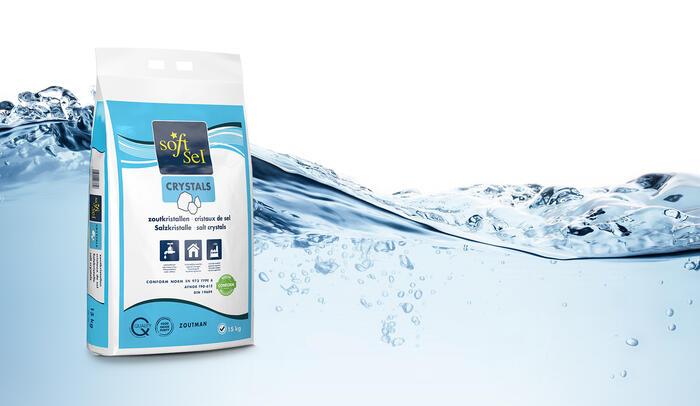
In conclusion, whenever you require salt for one of the applications mentioned above, be sure to opt for a type that adheres to all prevailing standards and laws. The relevant standards are always stated on the packaging. Please find an overview of the Soft-Sel products and the corresponding standards and laws below.
EN 973 Type A | EN 16401 | BPR EU 528/2012 | EN 14805 | EN 16370 | |
| SOFT-SEL® CRYSTALS | ✓ | ✓ | ✓ | ✓ (Type 2) |
|
| SOFT-SEL® GRANULAR | ✓ | ✓ |
| ✓ (Type 2) |
|
| SOFT-SEL® PLUSS | ✓ | ✓ | ✓ | ✓ (Type 1) | ✓ (Type 2) |
| SOFT-SEL® REGULAR | ✓ | ✓ |
|
| ✓ (Type 2) |
| SOFT-SEL® BLOCKS | ✓ | ||||
| POOLSEL |
| ✓ | ✓ |
|
|

Whenever you require salt for one of the applications mentioned above, be sure to opt for a type that adheres to all prevailing standards and laws.


Leave a comment
Do you see a mistake or have a question? Let us know below — you can also comment as a guest. Click ‘comment’ and choose ‘I’d rather post as a guest’ from the dropdown at the bottom. Prefer to get in touch directly? Feel free to email us at marketing@zoutman.com
Accept cookies to view and post comments
Manage cookie settings